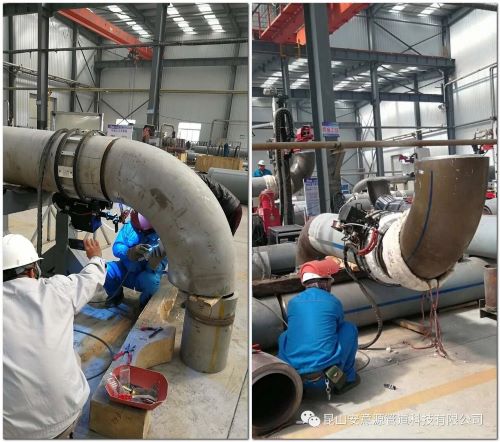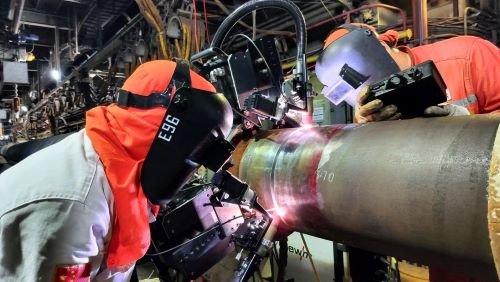
Match Basic Material Properties
Material Type Verification:
Standard carbon steel is suitable for arc welding or gas-shielded welding; TIG (argon arc) welding or laser welding is preferred for stainless steel and aluminum alloys; specialized ultrasonic or hot-plate welding machines are mandatory for plastics; for highly thermally conductive materials like copper or aluminum, verify that the equipment supports the necessary high-power compensation processes.
Thickness Parameter Check:
For thin sheets (0.1–3 mm), choose precision TIG welders or ultrasonic welders; for medium-to-thick plates (3–12 mm), select CO₂ gas-shielded welders; for extra-thick plates (over 100 mm), use submerged arc welders or electroslag welders to avoid issues such as incomplete penetration due to insufficient power or burn-through caused by excessive power.
Verify Process Compatibility
Check the equipment's list of compatible materials to ensure your specific material grade is supported, thereby avoiding parameter incompatibility issues often associated with niche alloys.
Conduct test welds using samples of your material; inspect the weld seam for tensile strength and thermal deformation to ensure they meet standards, and confirm that the equipment can consistently deliver the appropriate energy parameters.
Assess Intelligent Adaptation Capabilities
If the equipment features a welding expert system, input your material type and thickness and request parameter recommendations multiple times. If the system outputs dynamically optimized parameters rather than static values from a lookup table, it indicates the equipment can adapt to your material's specific characteristics, demonstrating superior compatibility.