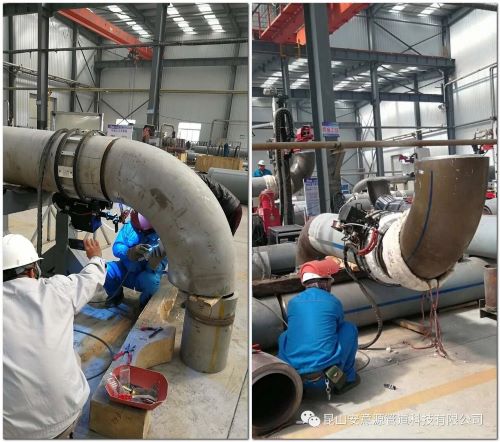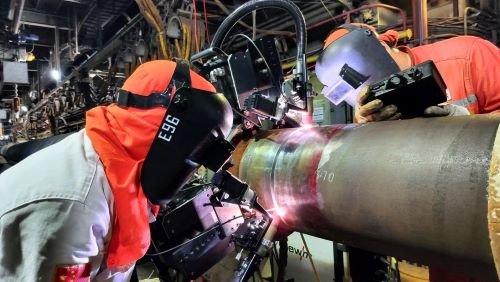
A welding machine is processing equipment that joins separate materials into a unified whole through localized heating. While structural details vary by type, the core structural characteristics can be categorized into universal core systems and typical model configurations:
Universal Core Structural Characteristics
Power Supply System (Power Core)
Serving as the equipment's energy source, this core comprises three main components-transformers, rectifiers, and capacitor banks. It steps down standard 220V mains voltage to a safe welding voltage (20–80V), converts alternating current (AC) to direct current (DC), smooths out current fluctuations, and ensures a stable arc output
Welding Execution Circuitry
A main control board acts as the "central brain" to regulate output parameters. Inductor coils filter out current noise, while copper-alloy output terminals handle high currents without overheating or deforming during operation; these elements directly determine the quality and stability of the welding process.
Auxiliary Support Components
Dual-ball-bearing cooling fans maintain optimal temperatures for continuous operation. The housing-constructed from flame-retardant engineering plastic and metal mesh-balances safety with ventilation. Additionally, a mobility assembly featuring locking swivel casters allows even heavy equipment to be repositioned with ease.